Streamline Manufacturing Planning in Syspro
Protect service levels without inflating inventory, built on Syspro data. Identify material and capacity risks earlier and reduce last-minute replanning.

Trusted by manufacturers planning complex production and supply networks





One production plan that stays aligned as conditions change
Recalculate production requirements as soon as demand, material availability, and capacity change, so decisions reflect the latest constraints.

Reflect production constraints
Account for available materials, inventory, lead times, batch rules, and capacity.

Respond faster to change
Update production and material needs without plan rework across separate tools.

Keep teams on the same plan
Align supply chain, procurement, and operations around shared planning data.
Plan with fewer production blind spots
Evaluate material requirements, capacity, and schedules before committing the production plan.
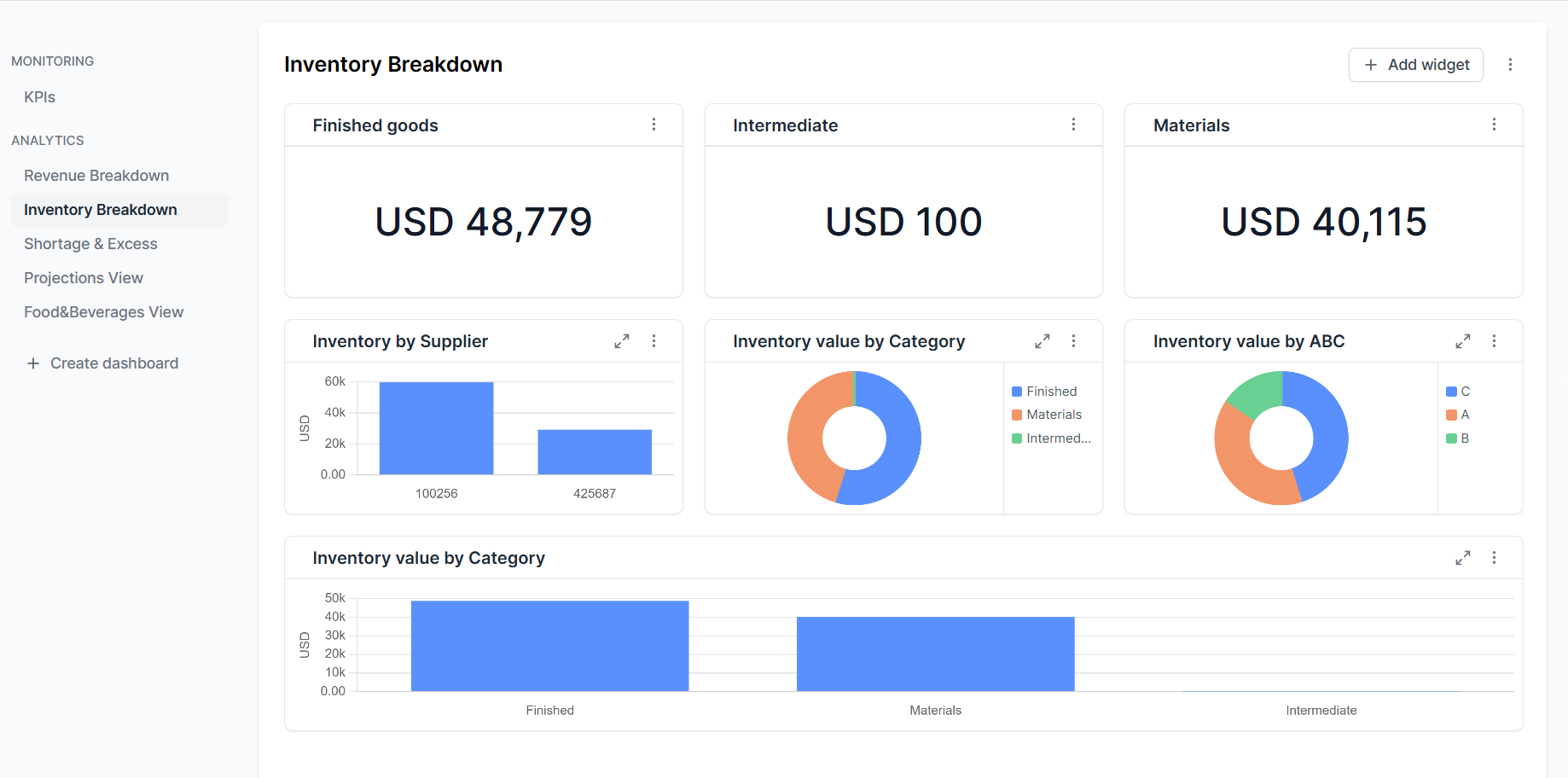
Master Production Planning
Plan production against real demand and operational constraints, with quantities your team can confidently review and approve
Master Production Planning
Plan production against real demand and operational constraints, with quantities your team can confidently review and approve
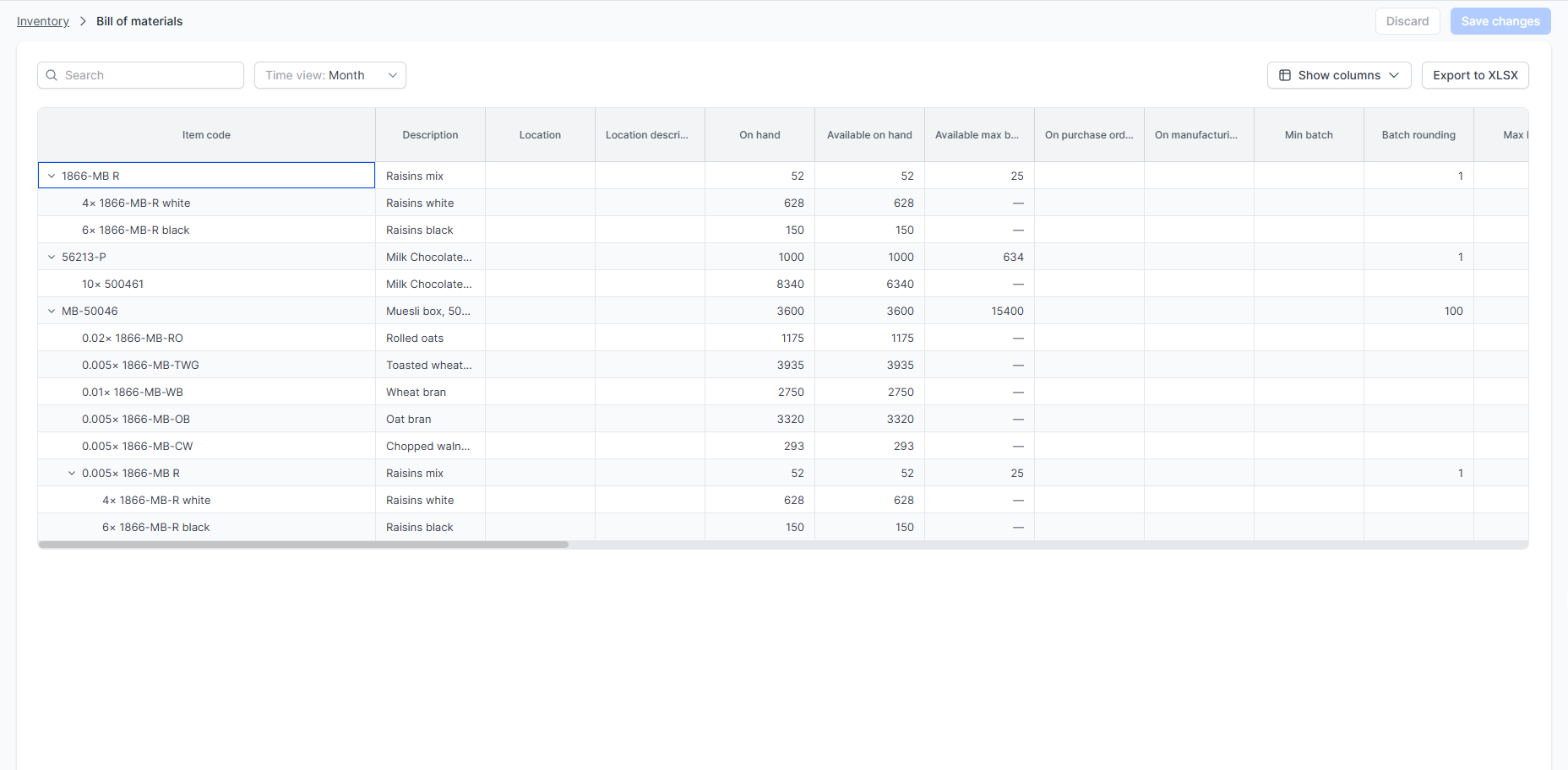
Material Requirements Planning
Keep production supplied by identifying material gaps early and acting on what needs to be purchased or produced
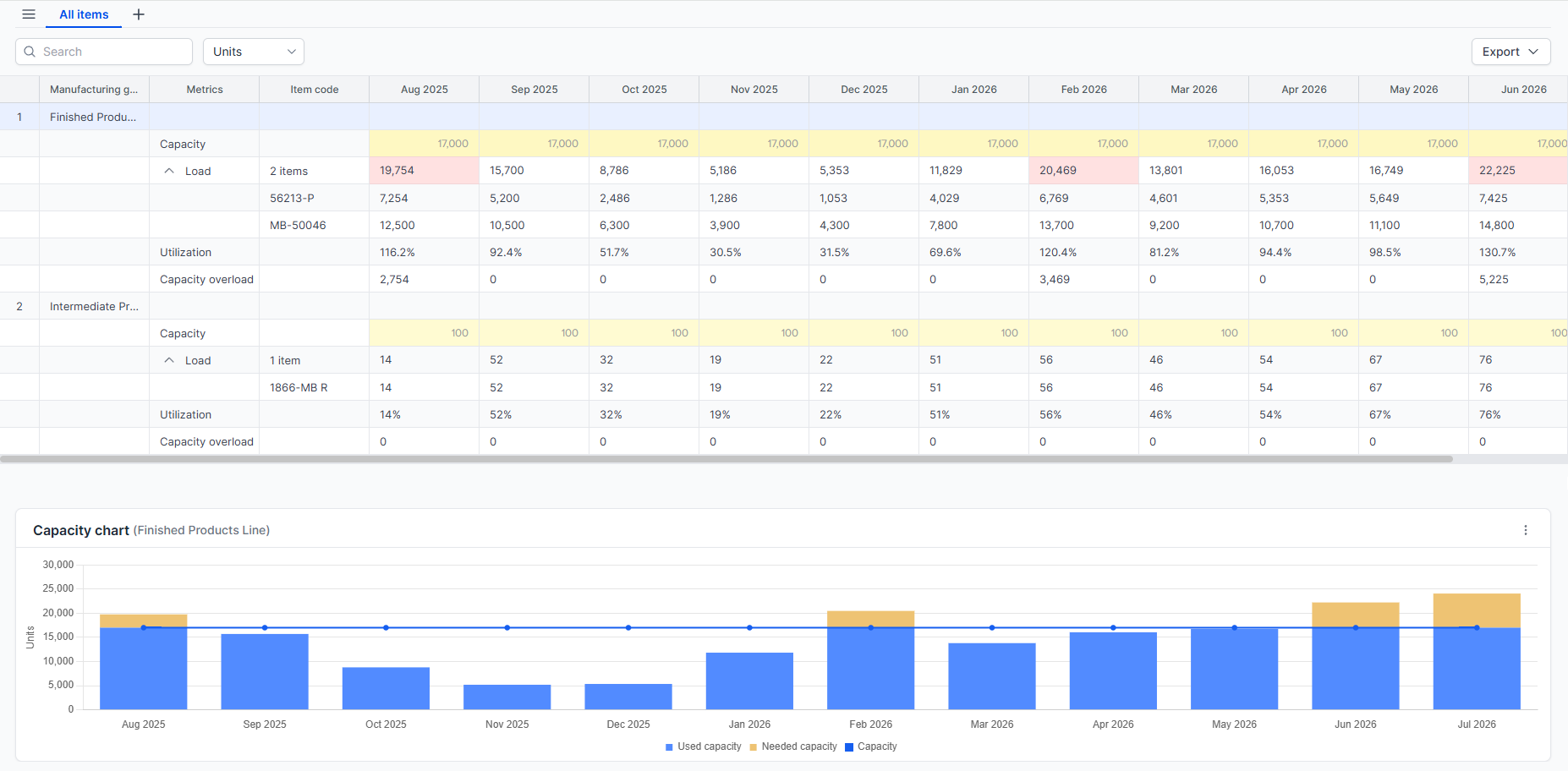
Rough-Cut Capacity Planning
See where production demand exceeds capacity and pinpoint the groups and items behind each overloaded period
Production Line Planning
Match production steps to the workstations that can handle them within available capacity and working time
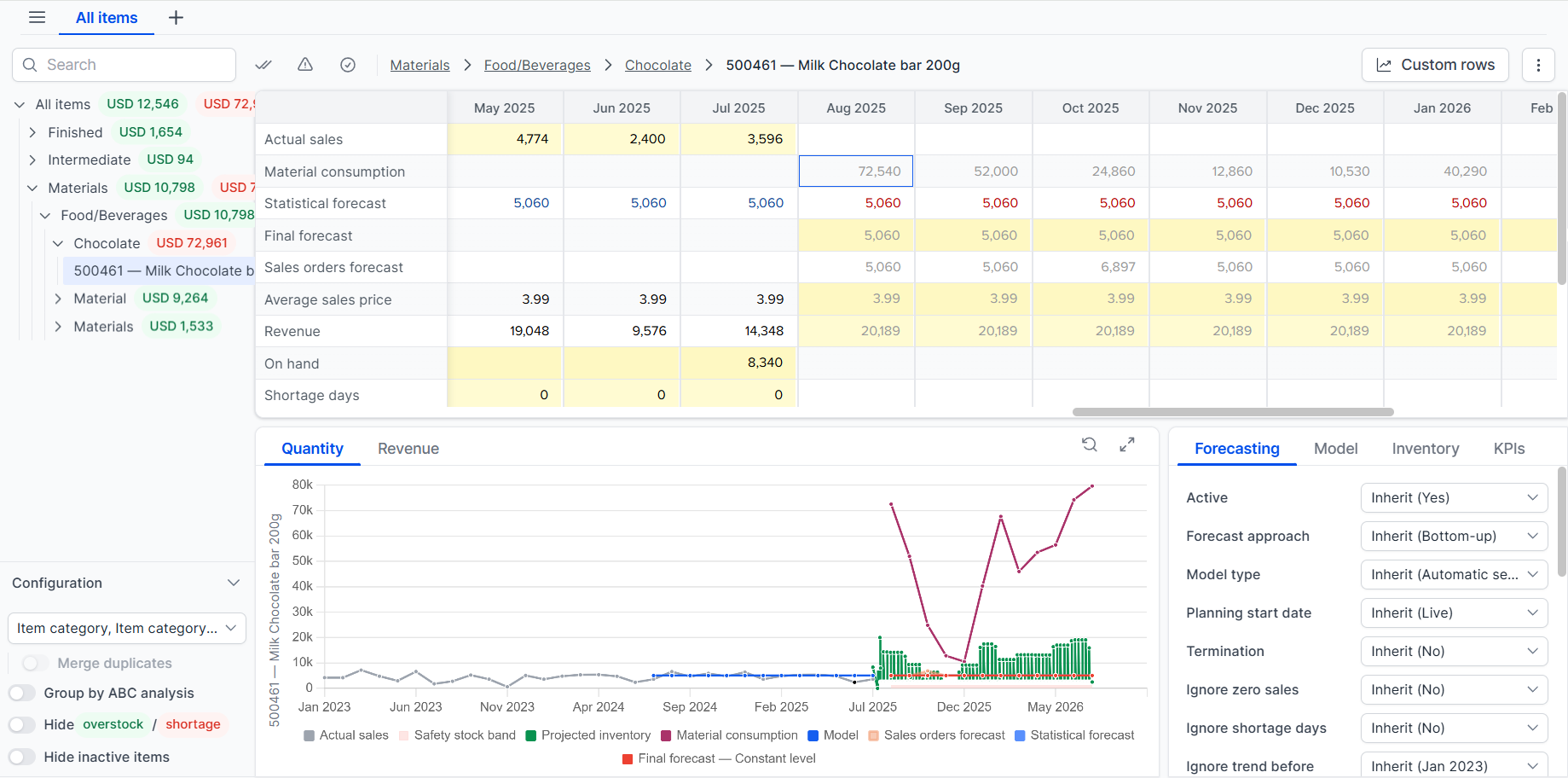
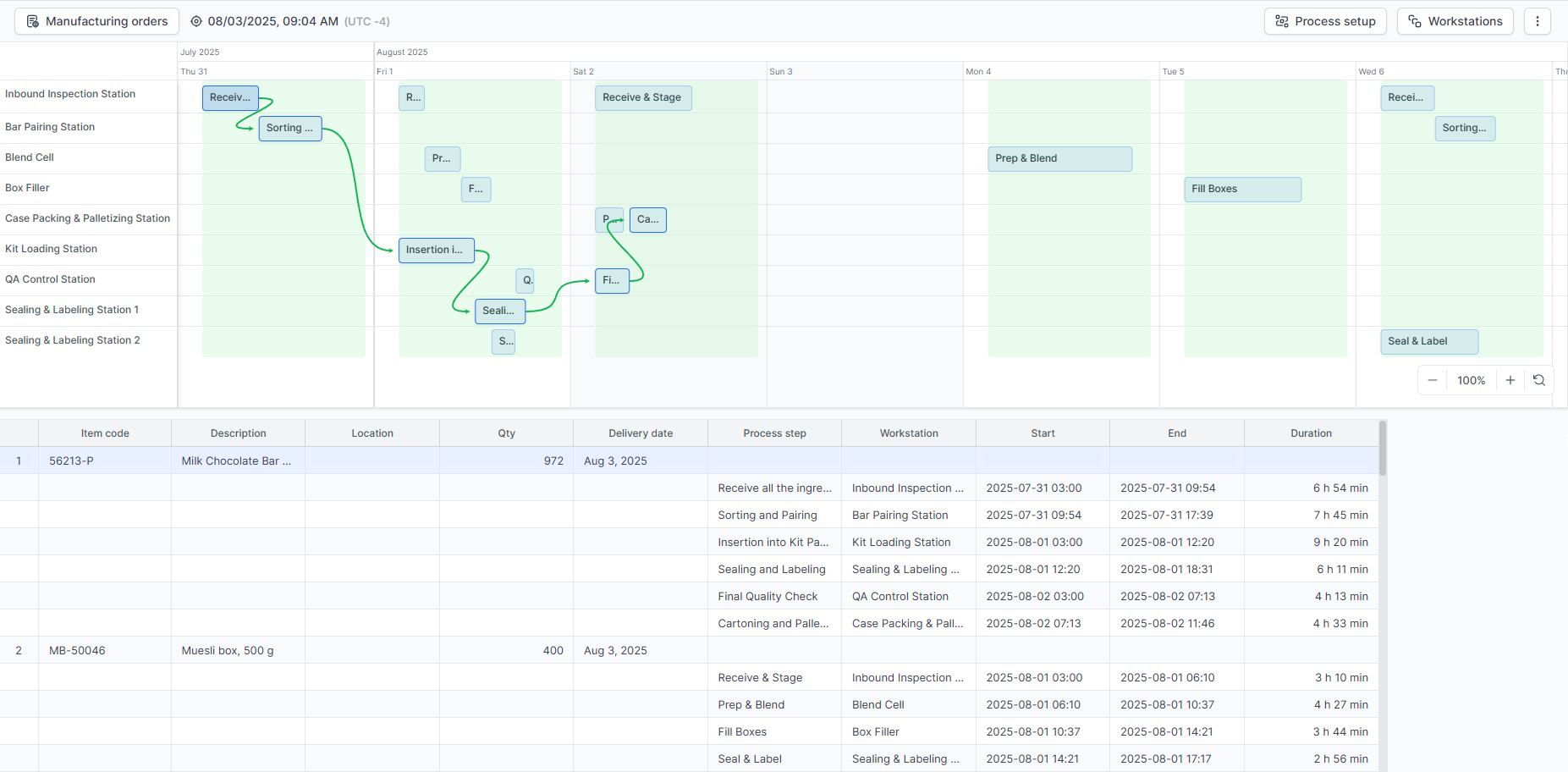
Production Scheduling
Break each manufacturing order into scheduled process steps, with clear workstation assignments and start-to-finish timing
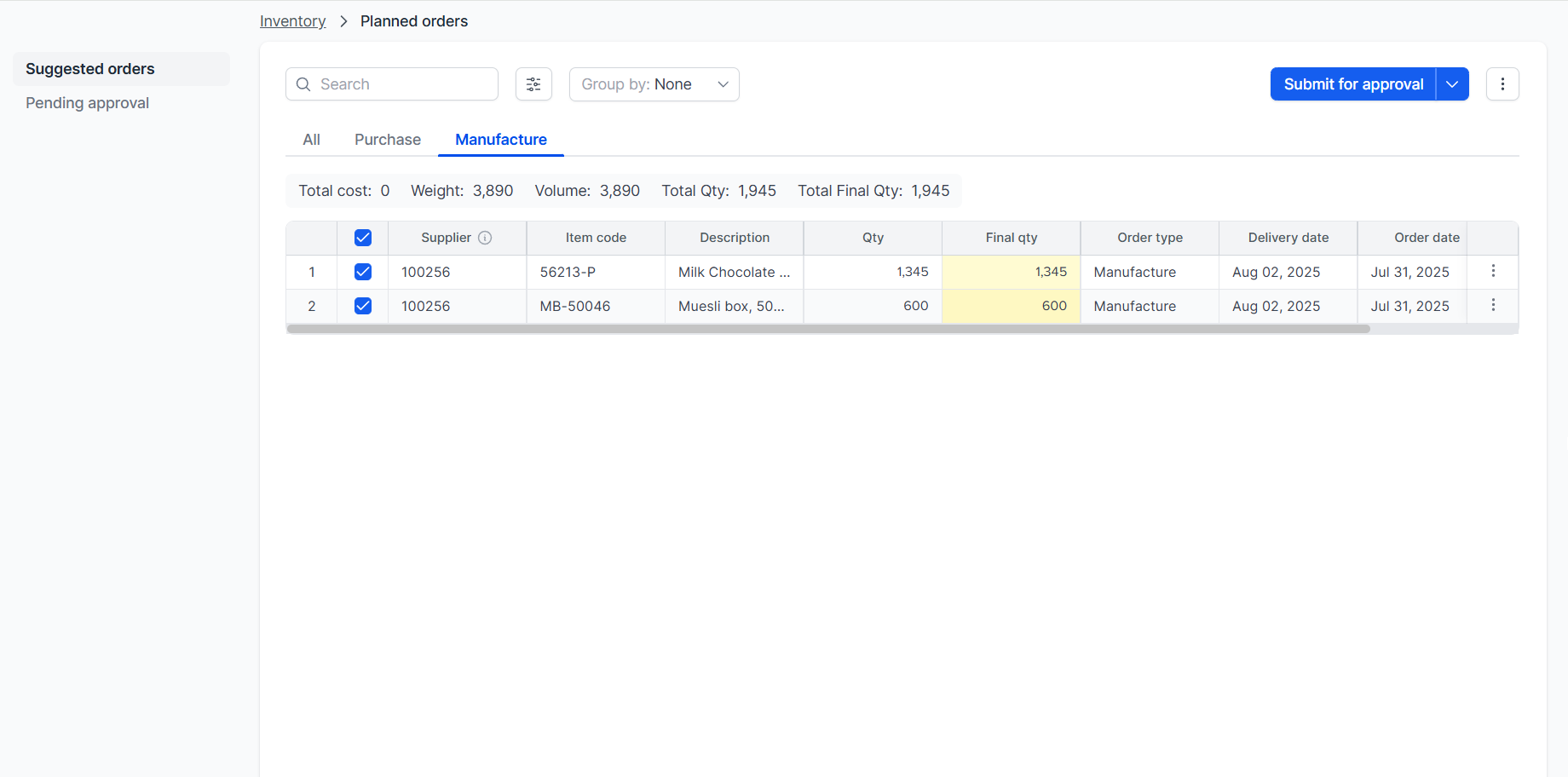
Material Substitution Management
Preserve demand history and inventory across replacement SKUs, while accounting for substitution rules and kit components
Optimizing Inventory Planning for a Global Aluminum Systems Leader
“Streamline gives us one demand and order-planning view across multiple locations and ERP systems. It helps us detect potential shortages faster and plan purchasing around warehouse capacity and supplier lead times.”


Reduce disruption and planning overhead across production
Evaluate production options earlier and make decisions with fewer last-minute trade-offs.
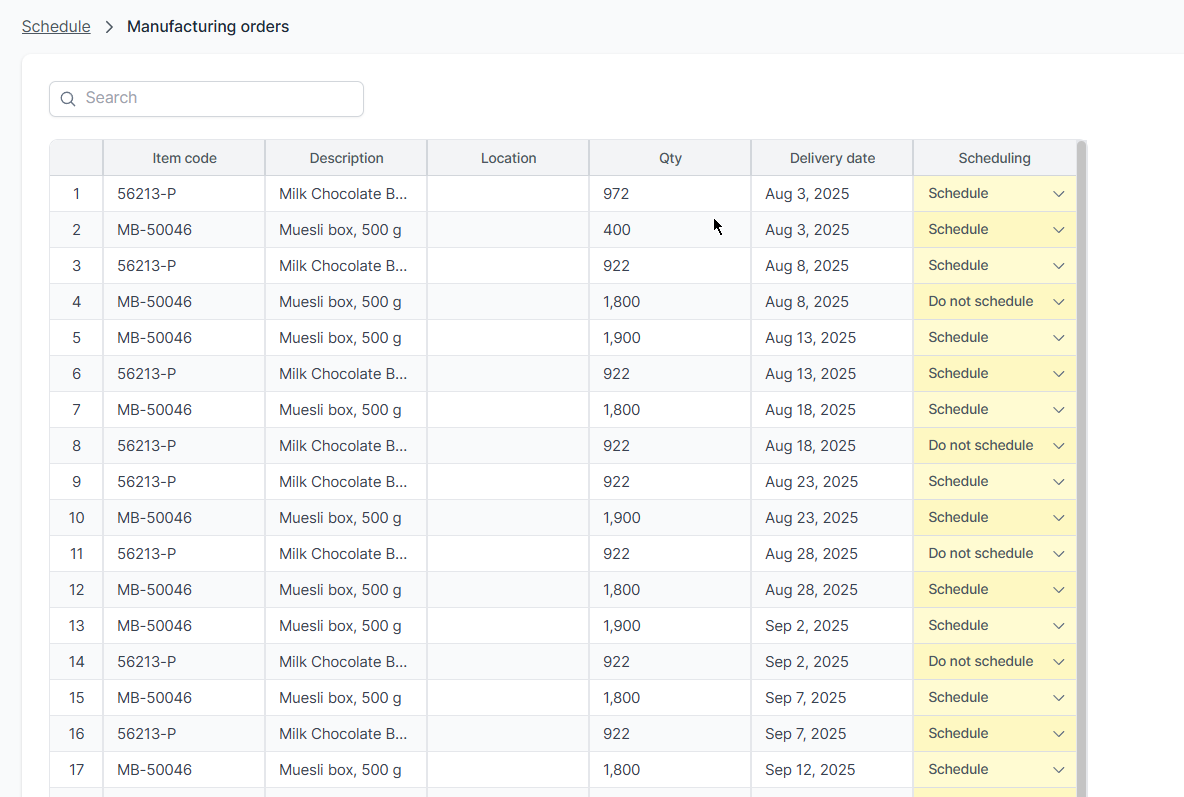
Prevent avoidable expedites, overtime, and last-minute schedule changes by surfacing material, capacity, and scheduling issues early enough to resolve them before production is disrupted.
Spend less time reconciling spreadsheets, rebuilding calculations, and resolving conflicting versions by keeping production requirements, constraints, and updates in one consistent process.
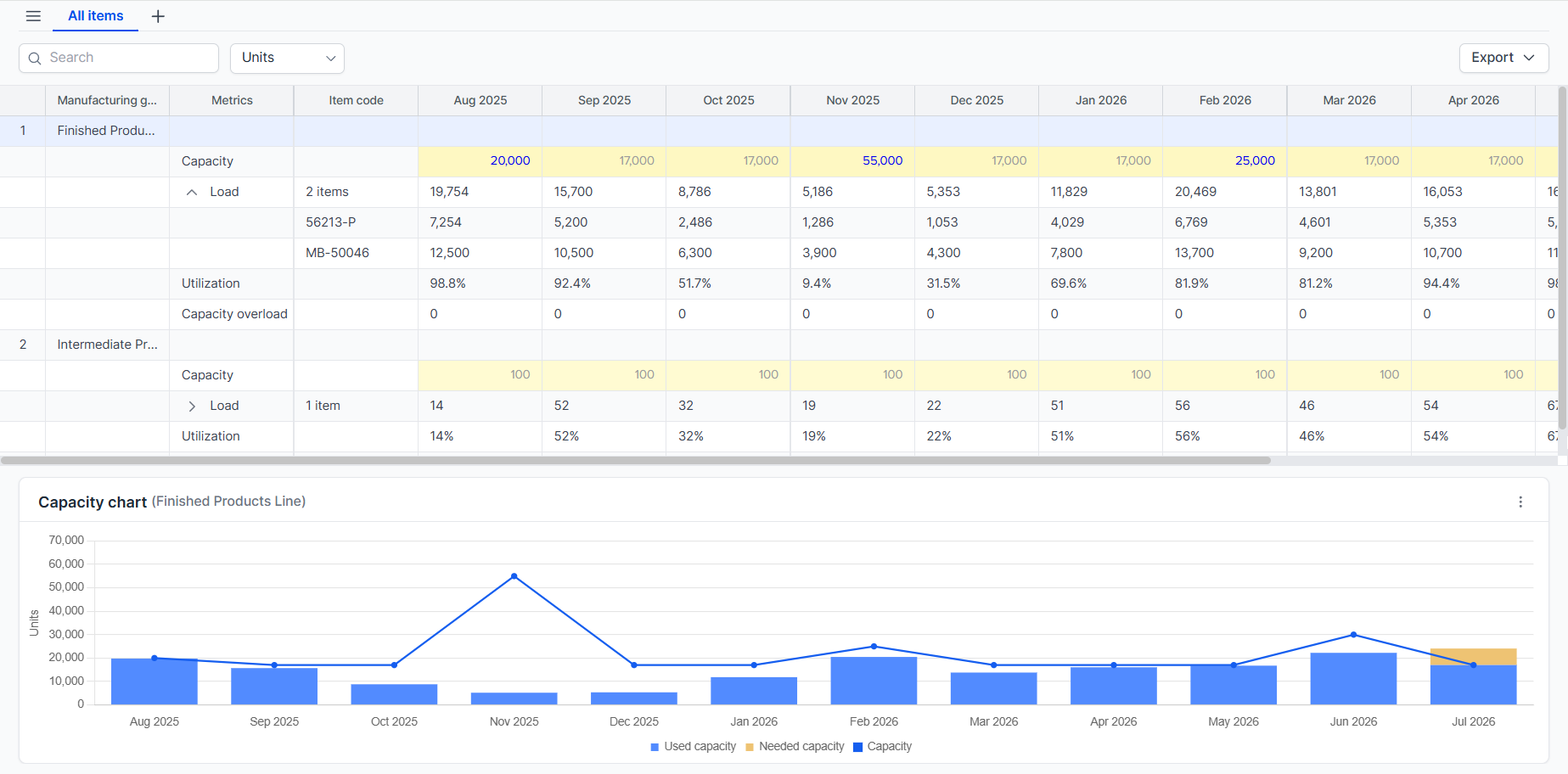
Give supply chain, procurement, operations, and production the same view of requirements, constraints, approved decisions, and the latest changes shaping the production plan.
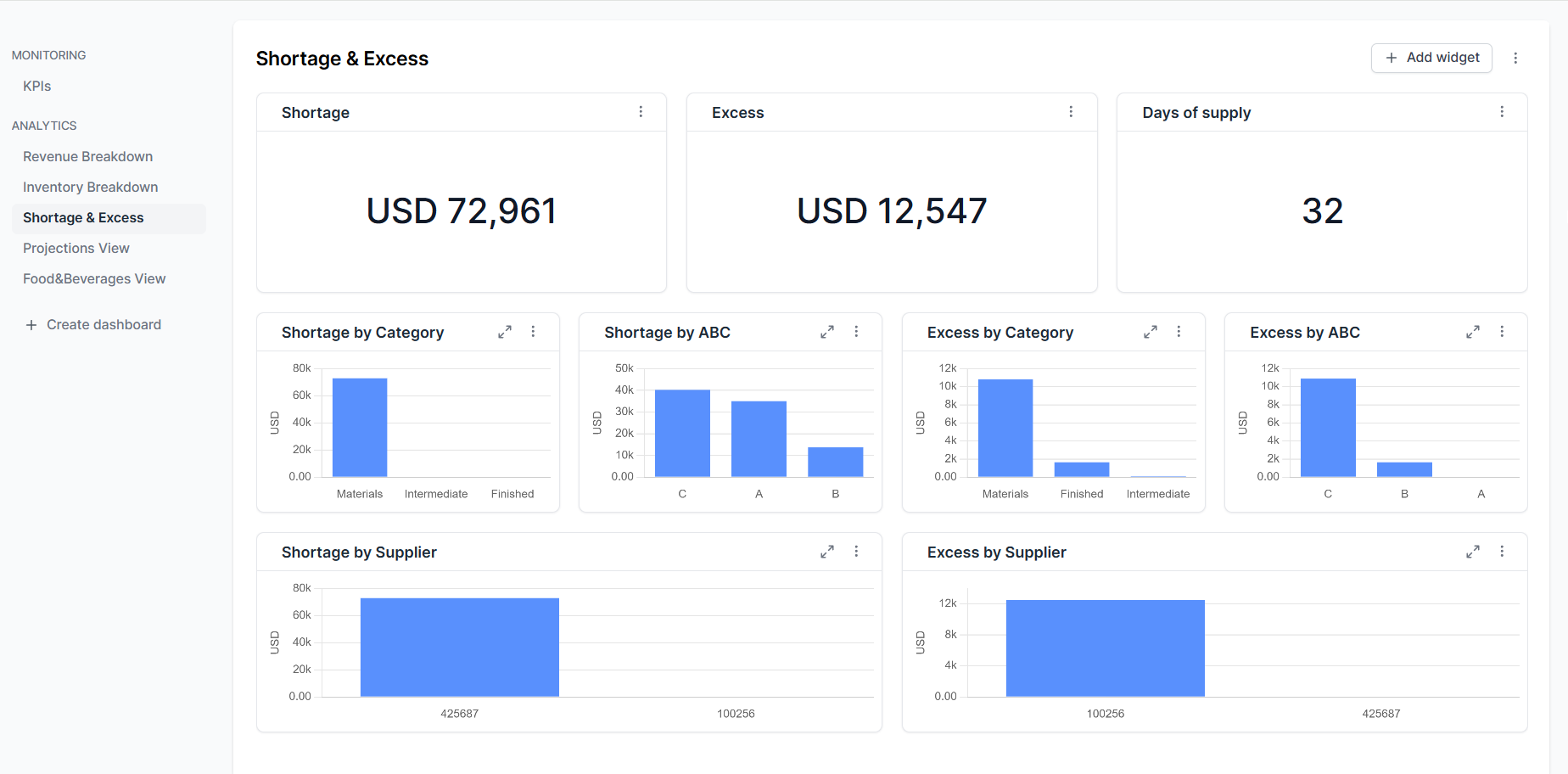
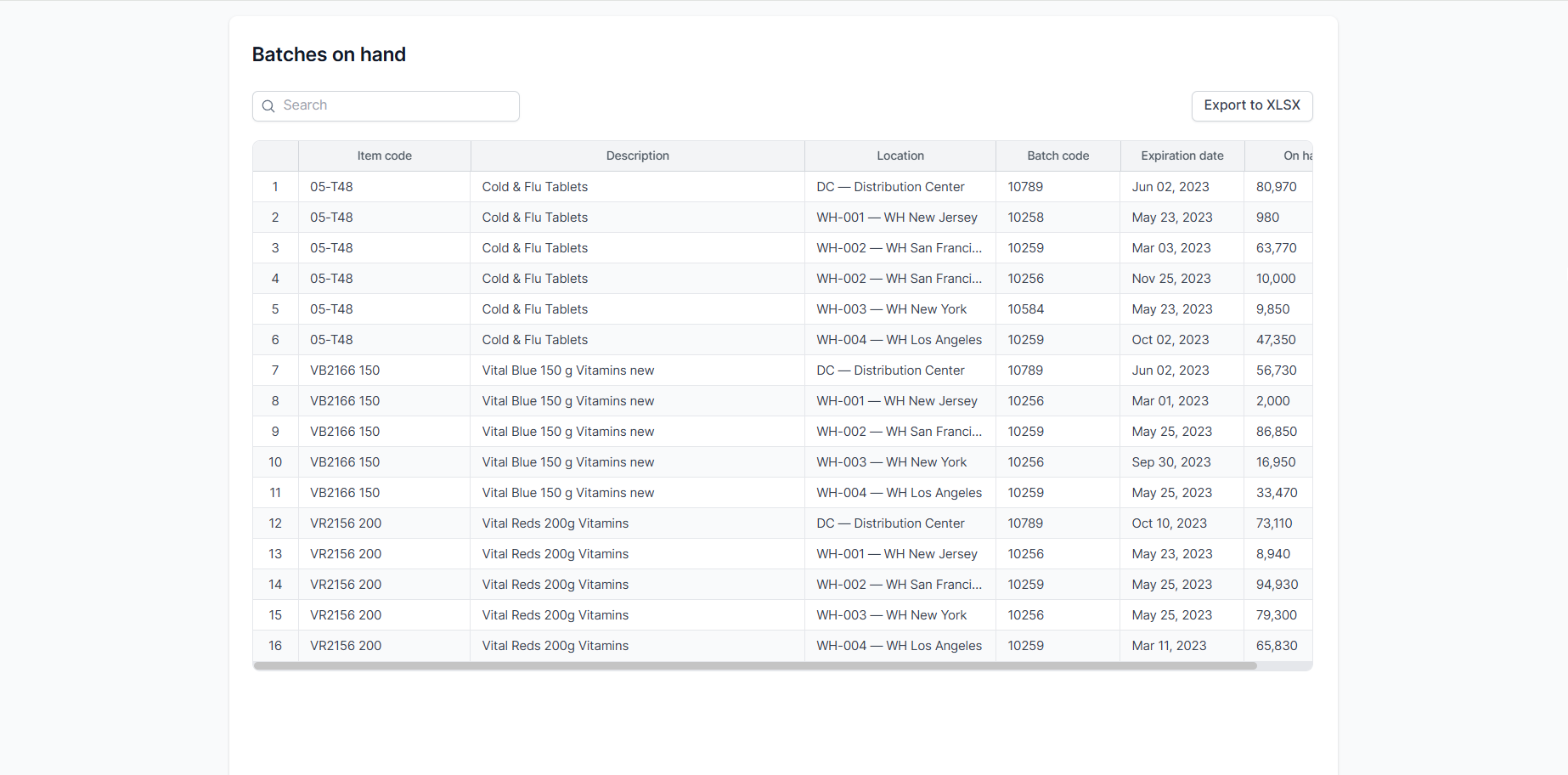
Coordinate larger product portfolios, multi-level BOMs, multiple locations, and changing constraints without fragmenting the planning process across separate tools or disconnected workflows.
See where the forecast is accurate, adjusted, or uncertain
Use consistent reports to identify where forecast performance needs attention and quantify the expected variation around future demand.
Measure forecast accuracy
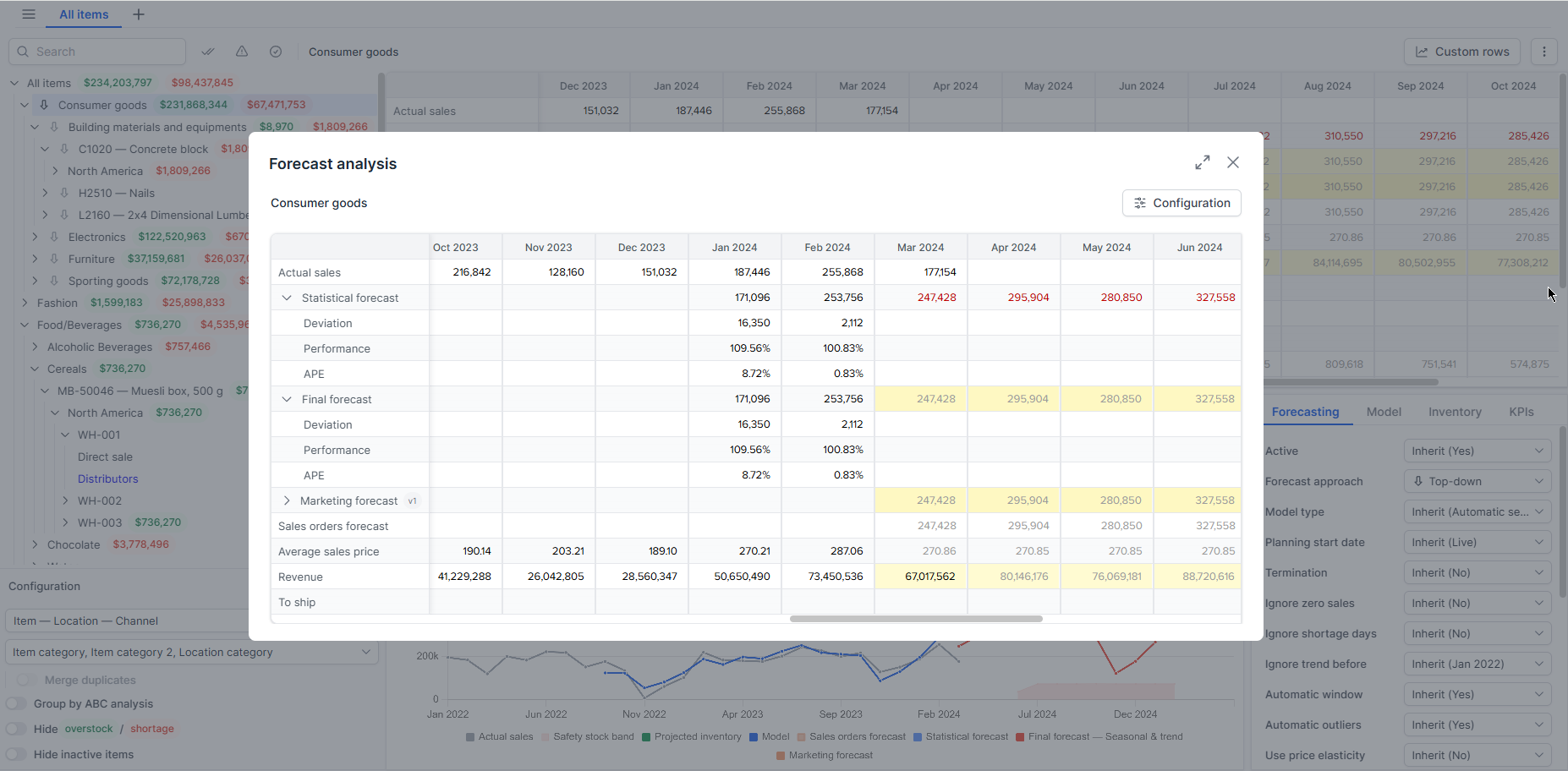
Evaluate forecast performance with APE, MAPE, SMAPE, and weighted MAPE across products, categories, and planning periods, so your team can pinpoint where accuracy is slipping and prioritize corrective action where it matters most.
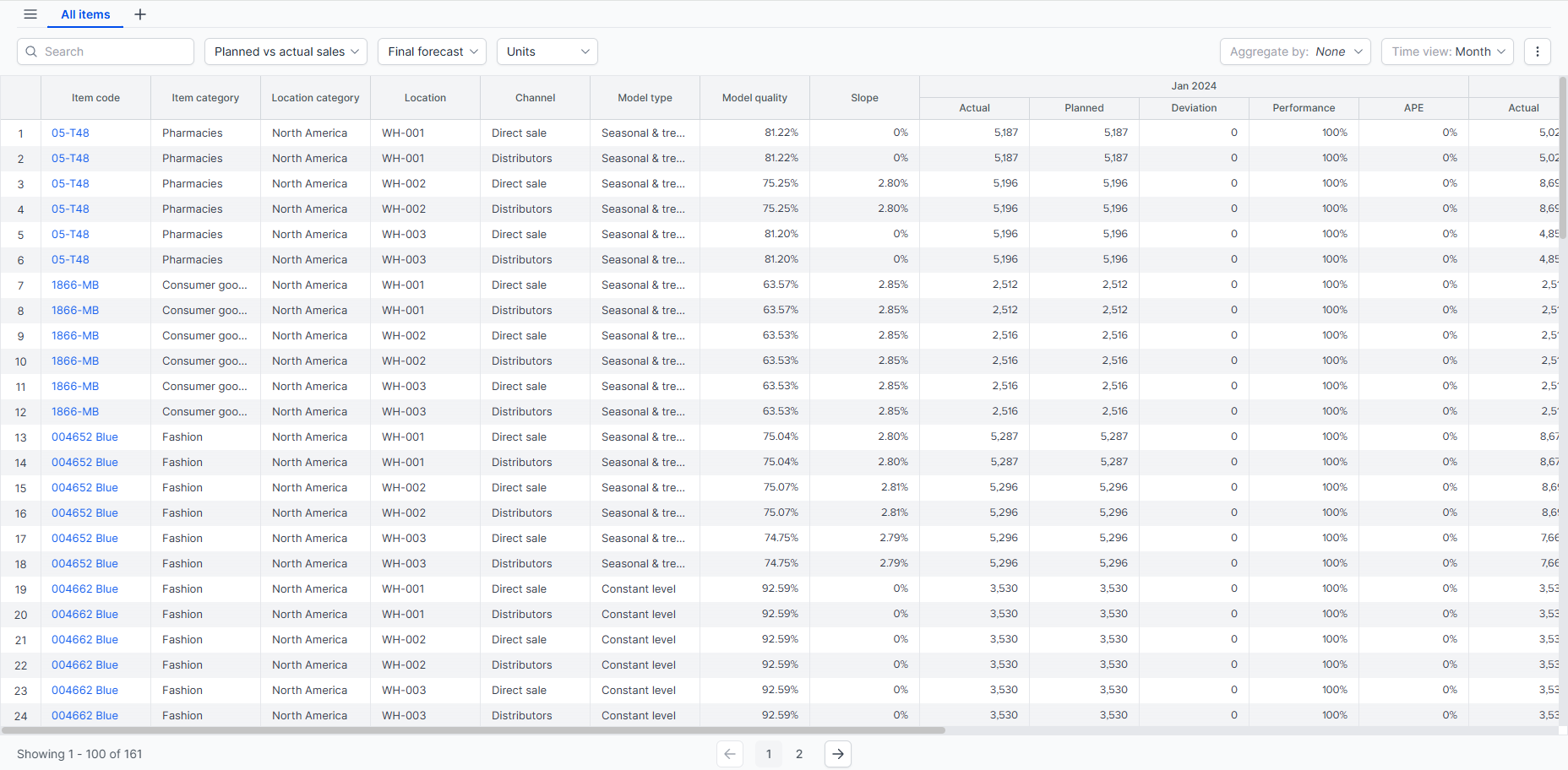
Compare forecasts with actual sales
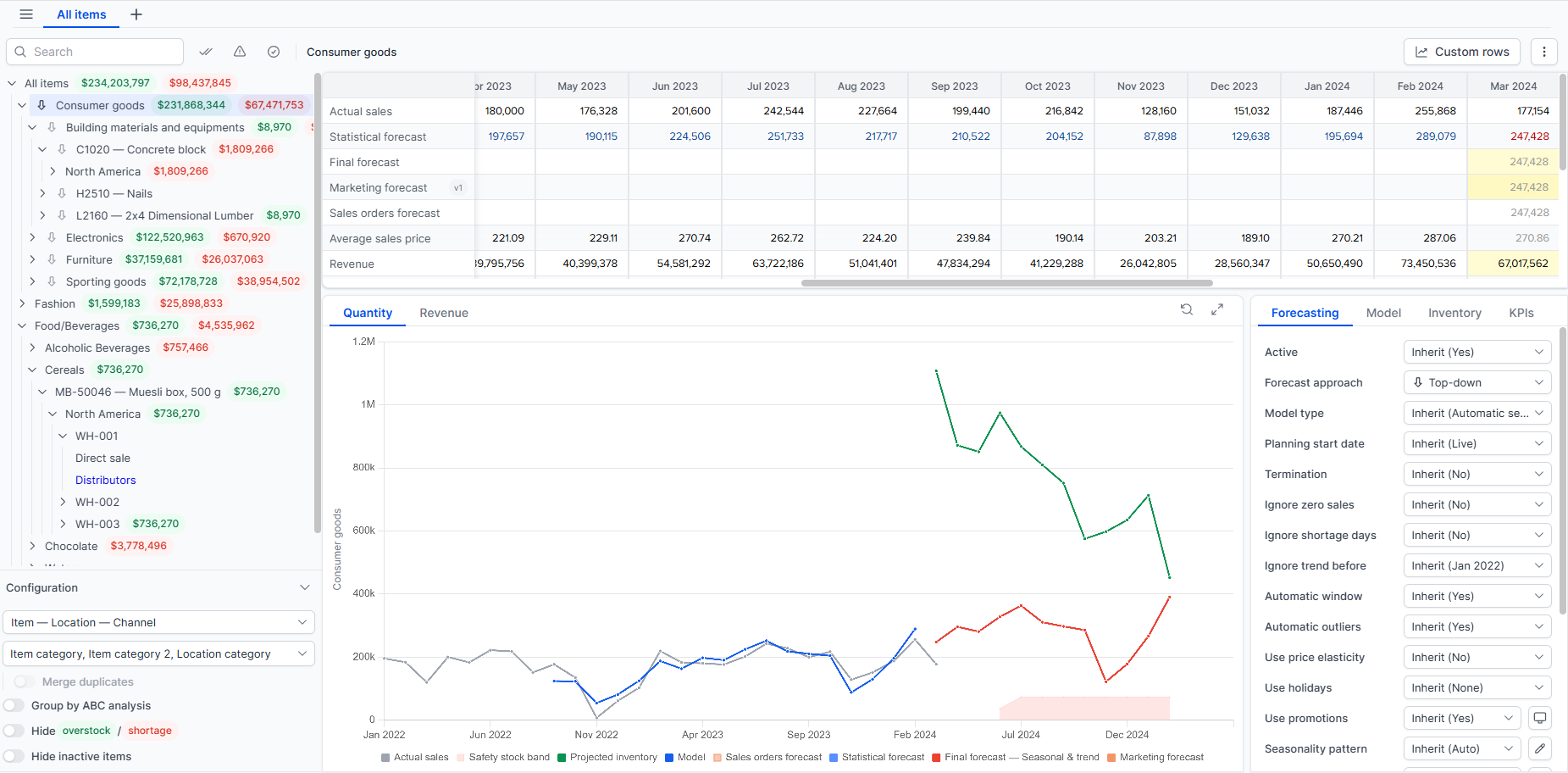
Employ planned-versus-actual reporting to identify where sales differ from the forecast, track how closely demand plans hold up over time, and surface recurring gaps before they affect downstream supply decisions.
Review forecast adjustments
Compare statistical, final, and custom forecast versions side by side to see exactly where and why planner overrides changed projected demand, building a clear audit trail that shows whether manual changes helped or hurt the plan.
Assess forecast uncertainty
Apply configurable confidence limits to understand the potential variation around future demand projections, helping team members gauge how much a forecast might shift and set safety stock or buffer levels accordingly.
Use AI to improve forecasts and speed up planning work
Get a more reliable demand signal for production planning with less manual forecasting work.
Better forecasts across the portfolio
Detect seasonality, trends, anomalies, and intermittent demand, then apply the most suitable forecasting approach to each SKU.
Faster planning analysis
Retrieve planning data, create custom filters, and analyze exceptions through simple natural-language requests.
Fewer data preparation bottlenecks
Generate, explain, validate, and update transformation SQL directly in Streamline to reduce manual data preparation work.


Connect manufacturing planning with your existing systems
Keep planning recommendations traceable to the source data and constraints behind them.
Bring planning inputs together
Run manufacturing planning in one space
Move approved decisions forward