Streamline Strategic Planning in Spire
Make planning decisions built on Spire data, with a clear view of how they will affect revenue, margins, inventory investment, and service performance.

Trusted by companies making high-stakes supply chain decisions





Keep strategic and operational plans working as one
Connect long-range plans with the demand, inventory, supply, and capacity decisions that bring them into execution.

Stress-test core planning assumptions
Run what-if scenarios and assess how changes affect demand, inventory, replenishment, and supply before the plan moves into execution.

Synchronize demand and supply plans
Adjust forecasts or planning inputs and automatically recalculate inventory outcomes and replenishment requirements against the latest conditions.

Carry strategic decisions into execution
Use the same demand, inventory, supply, capacity, and financial model to move from long-range planning to executable replenishment and production plans.
Quantify what the plan demands from the business
Assess future inventory, purchasing, capacity, revenue, and cash requirements across the planning horizon.
Integrated Business Planning (IBP)
Balance operational and financial priorities in one plan, with clear trade-offs across demand, capacity, inventory, revenue, and margin.
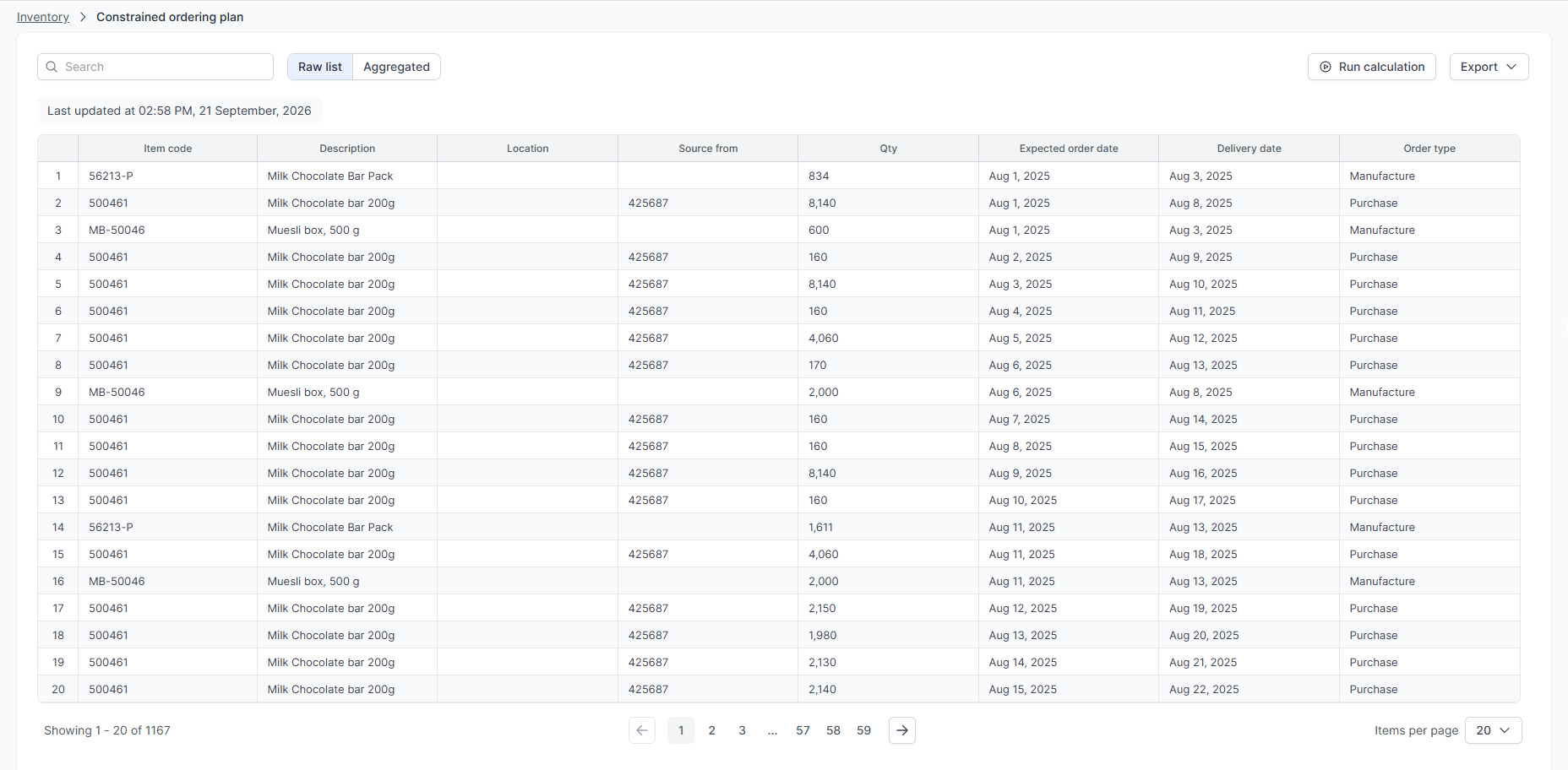
Integrated Business Planning (IBP)
Balance operational and financial priorities in one plan, with clear trade-offs across demand, capacity, inventory, revenue, and margin.
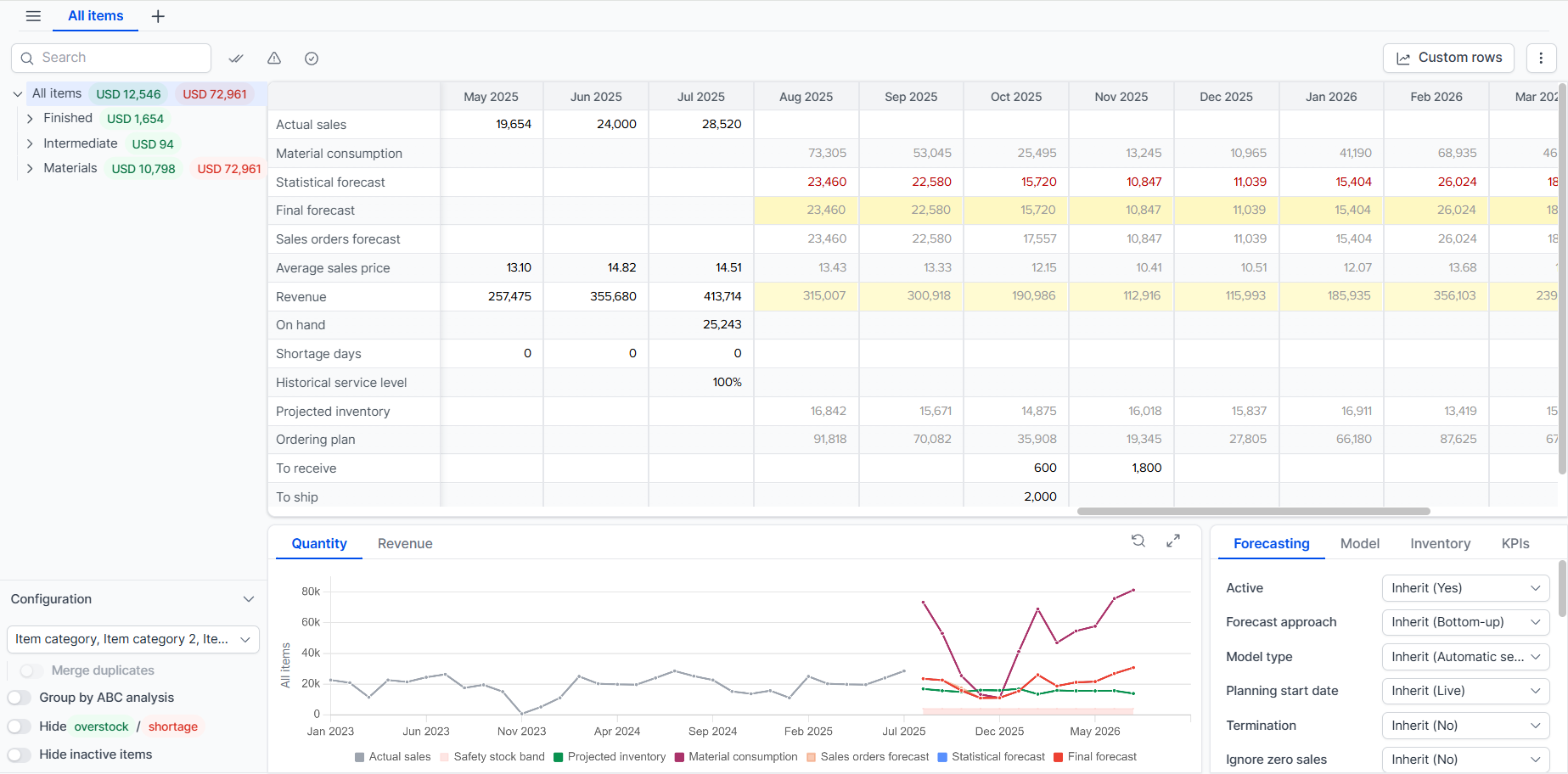
Sales & Operations Planning (S&OP)
Lock in an approved demand baseline for supply planning while future forecasts keep evolving across planning cycles.
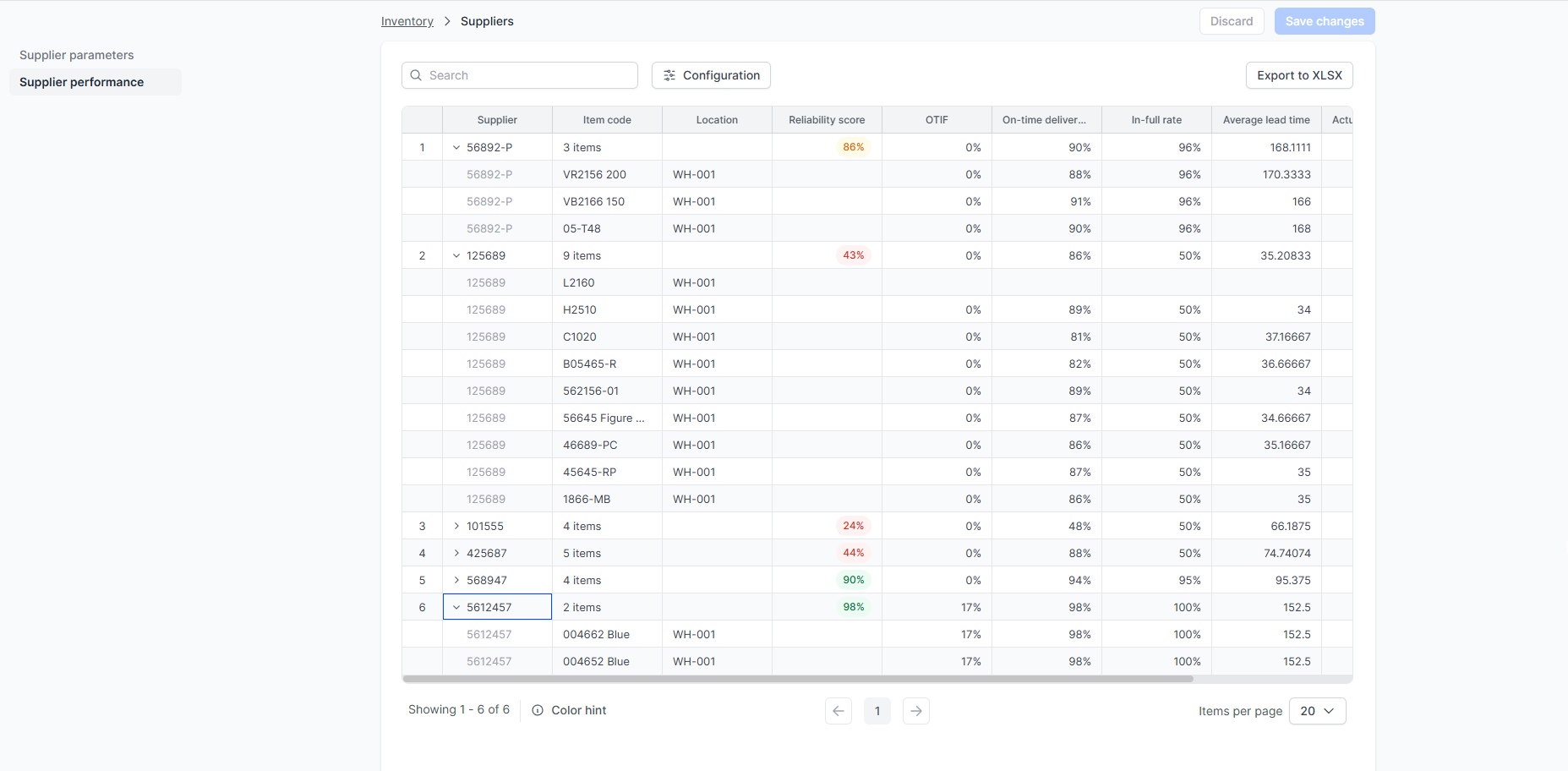
Scenario Planning
Test how replenishment decisions hold up under forecast uncertainty and see how inventory and supply positions develop before changing the plan.
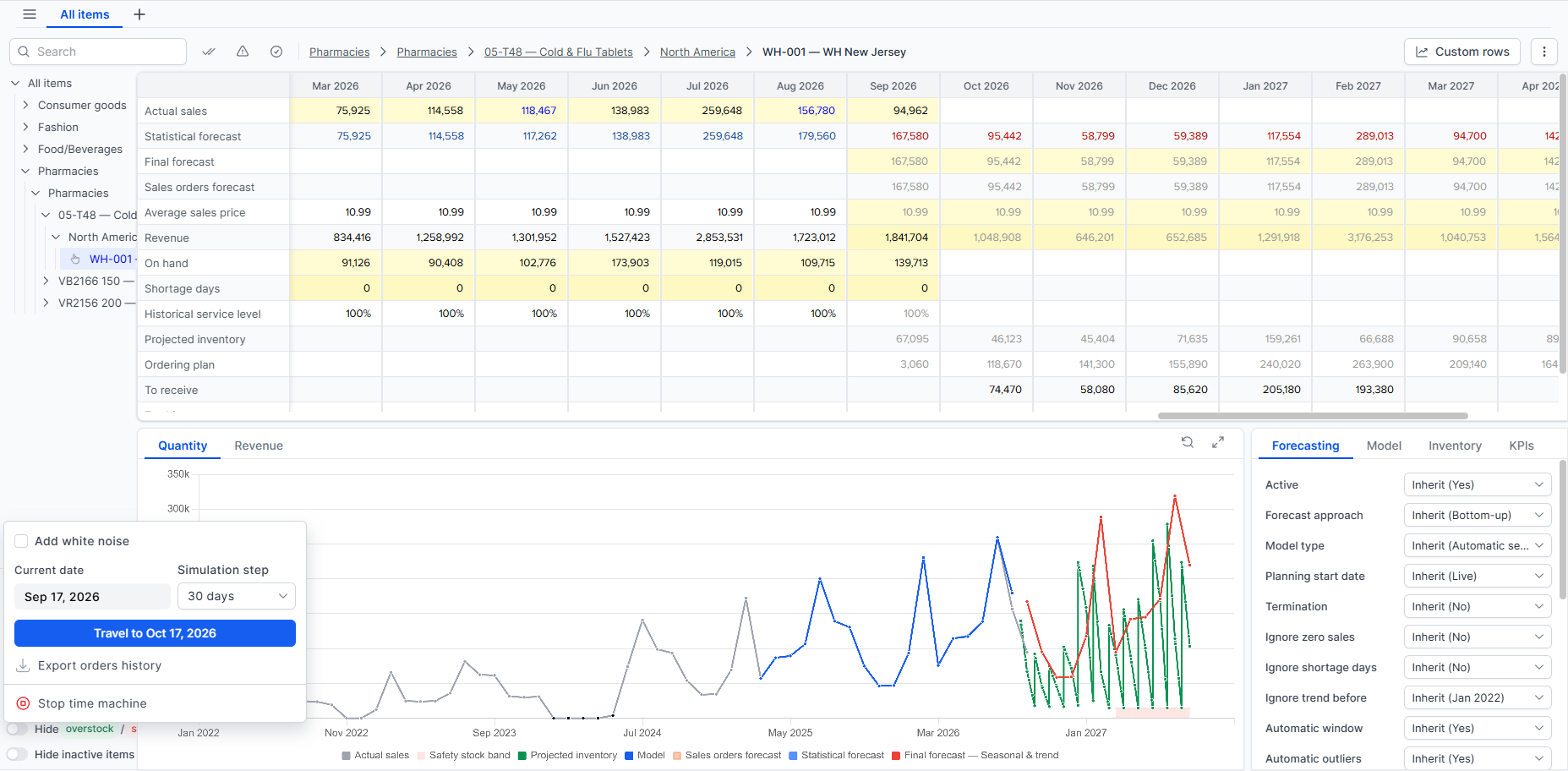
Long-Range Planning
Project where demand will strain inventory and capacity, with a forward view of purchasing needs and financial impact.
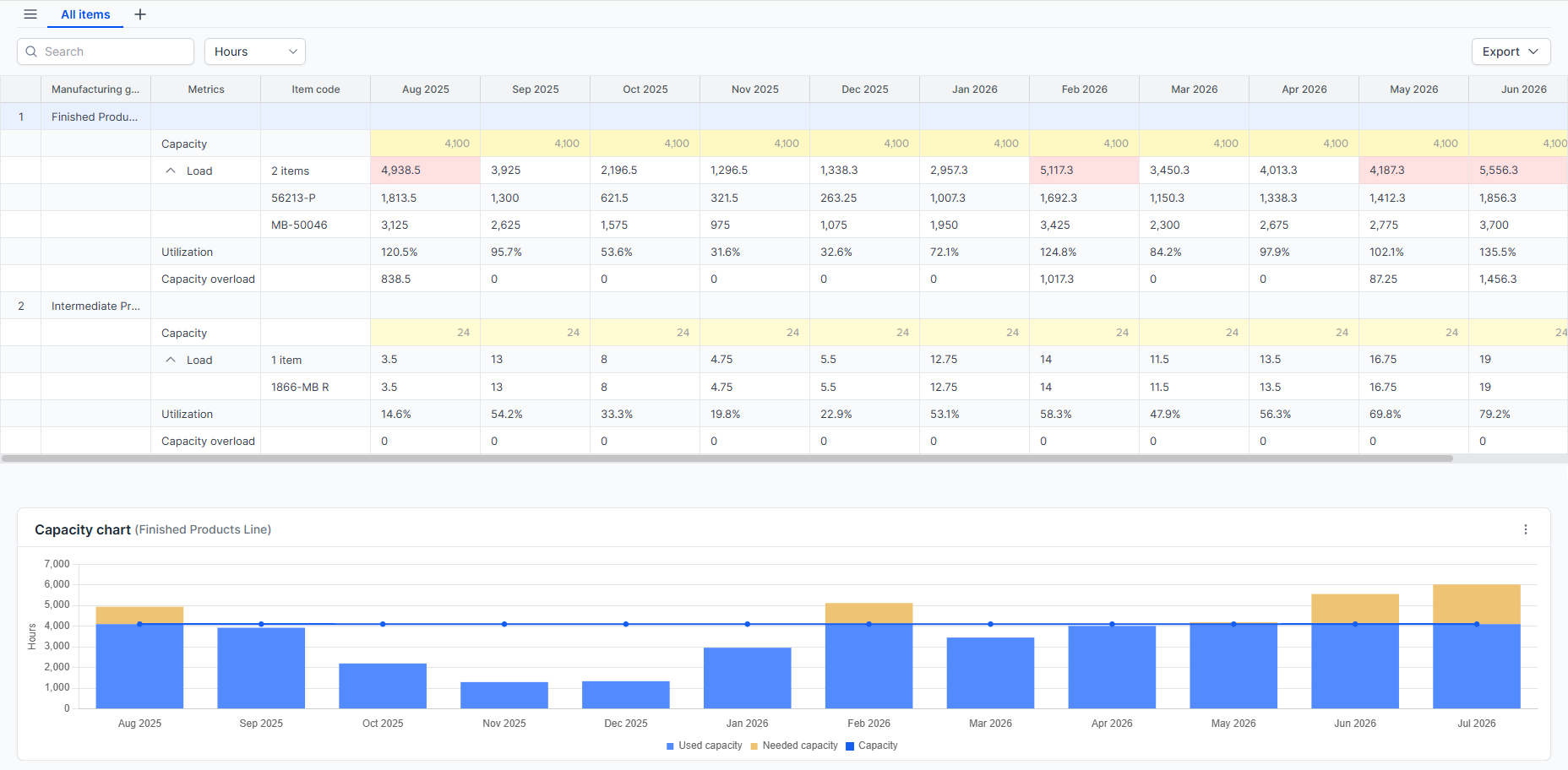
Financial Impact Analysis
Connect planning decisions to the financial metrics that matter, from inventory efficiency and margin to cash performance and enterprise value.
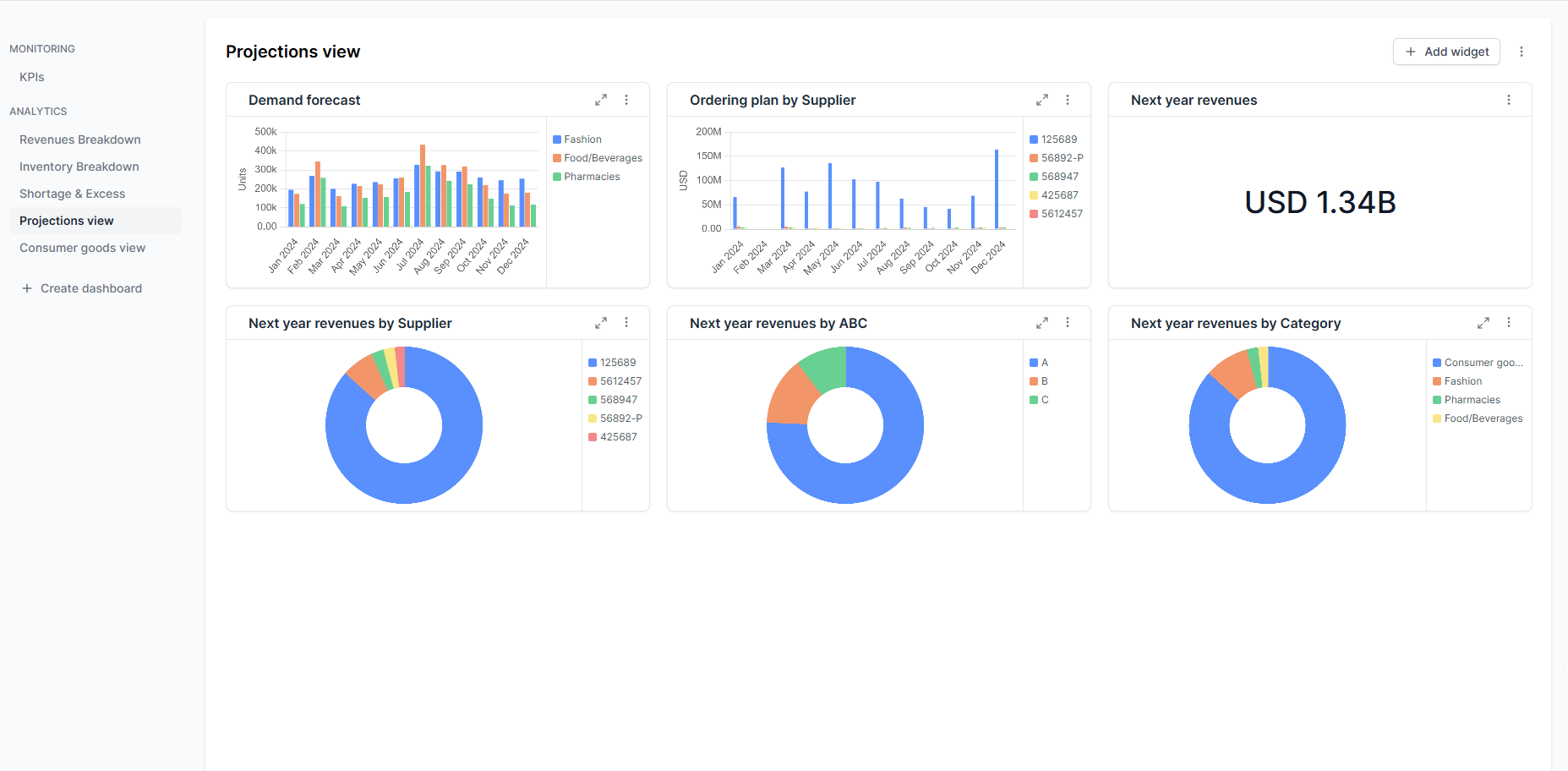
Supply chain analytics
Answer planning questions with tailored dashboards, flexible comparisons, and drill-downs across the business dimensions that matter.
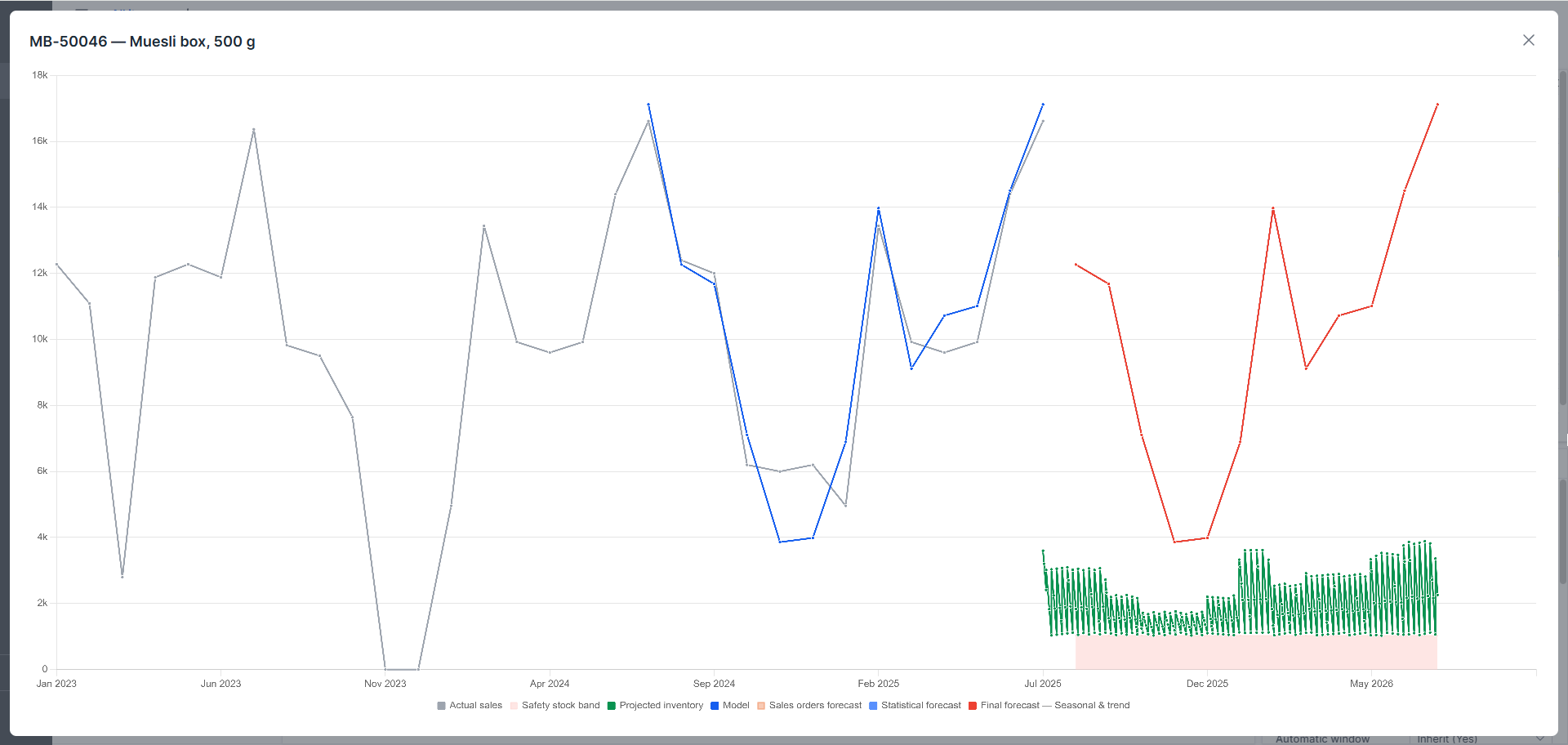
Annual operation plan & budgeting
Set annual revenue and inventory targets that stay aligned with projected demand, purchasing needs, and planned stock levels.
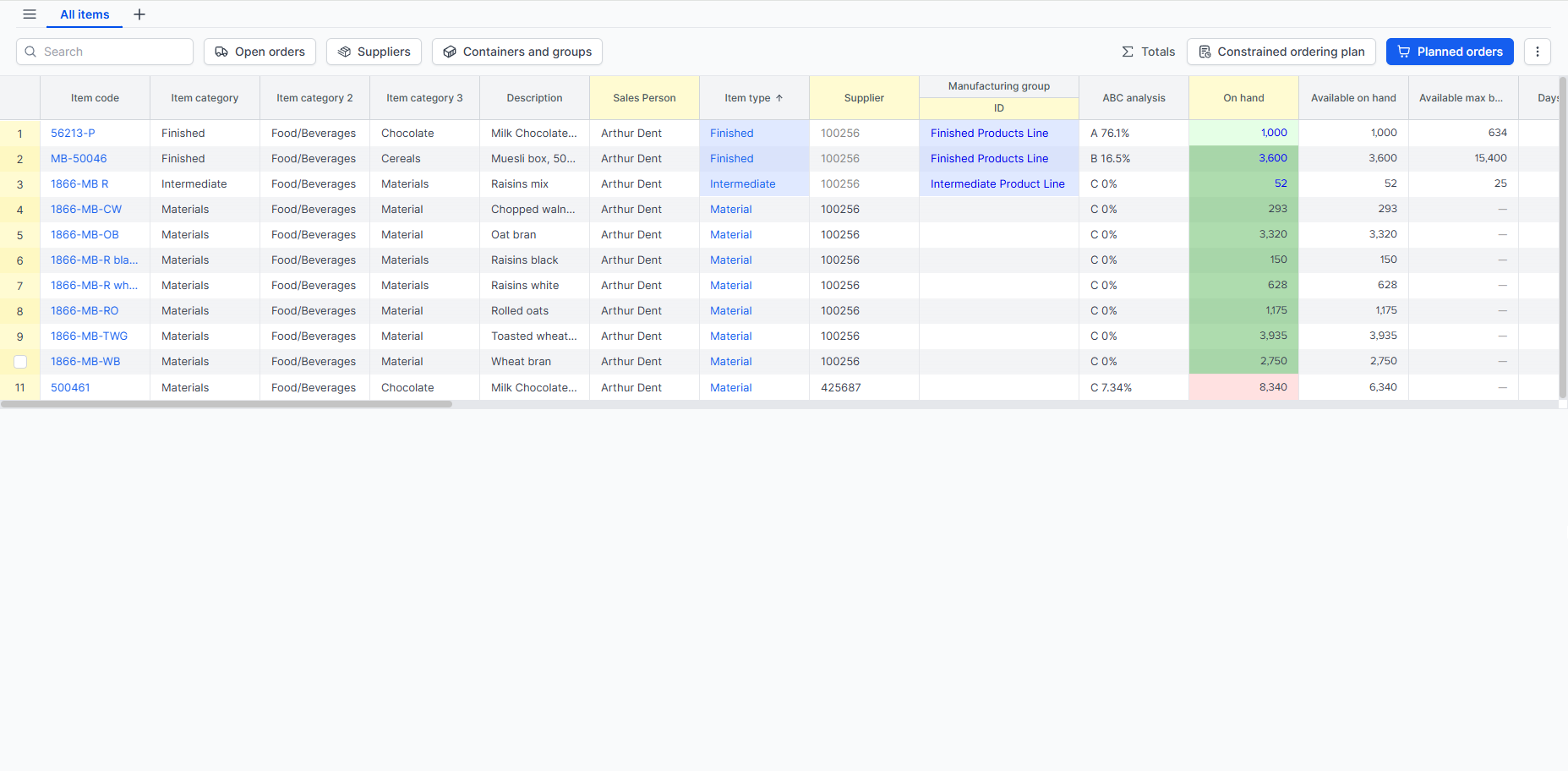
Operating cash flow management
Time inventory purchases against future needs and spot where excess or slow-moving stock could tie up cash longer than planned.
Make strategic planning more decisive and easier to control
Keep the planning cycle centered on the decisions that need attention and reduce the effort of tracking changes.
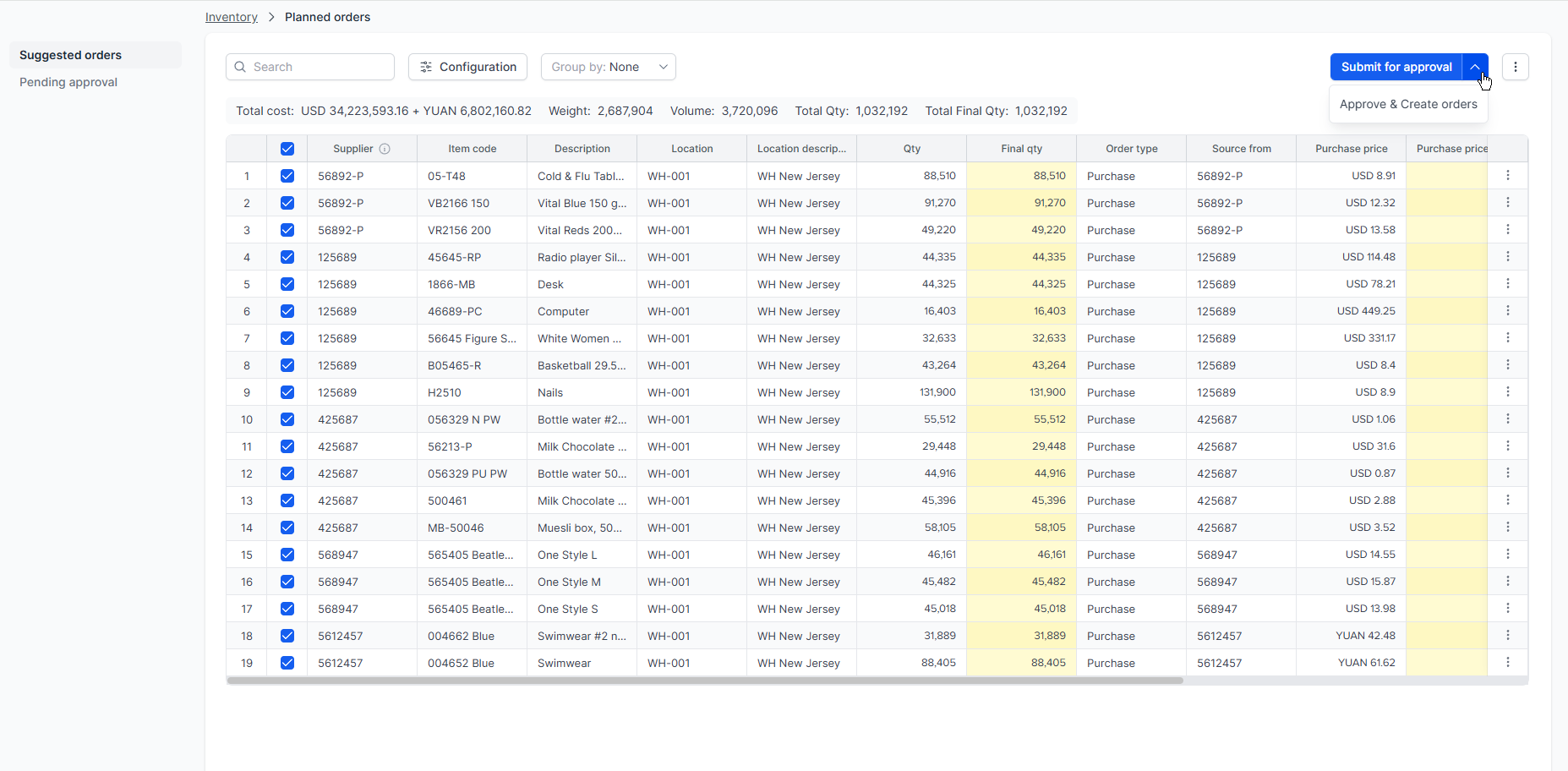
Surface shortages, overstocks, forecast issues, and capacity overloads early so planners can prioritize the areas that require intervention and act before they affect the wider plan.
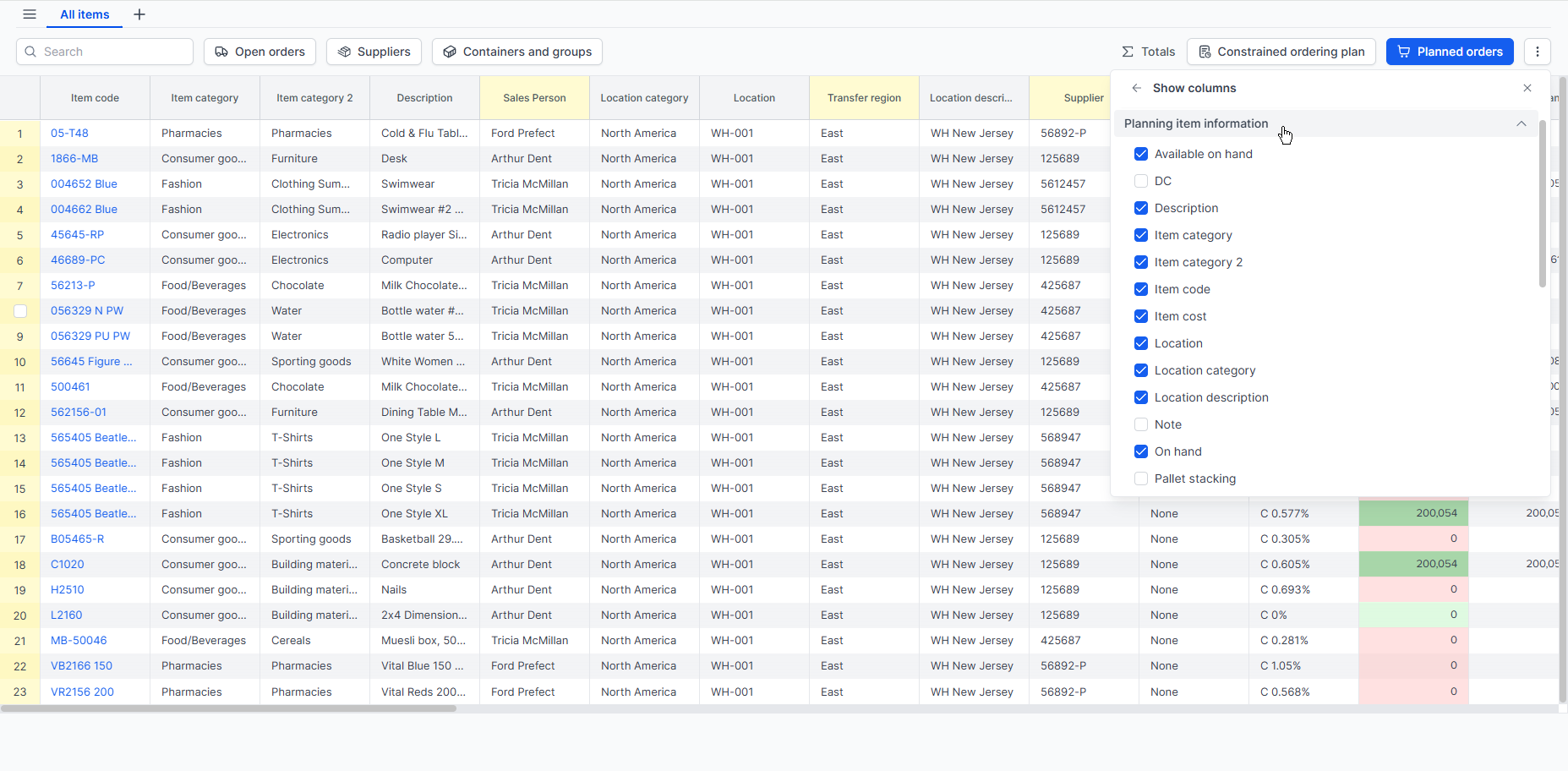
Bring current planning outputs into reviews faster as new information becomes available, so teams can reassess priorities, update assumptions, and respond to changing demand, supply, or capacity conditions sooner.
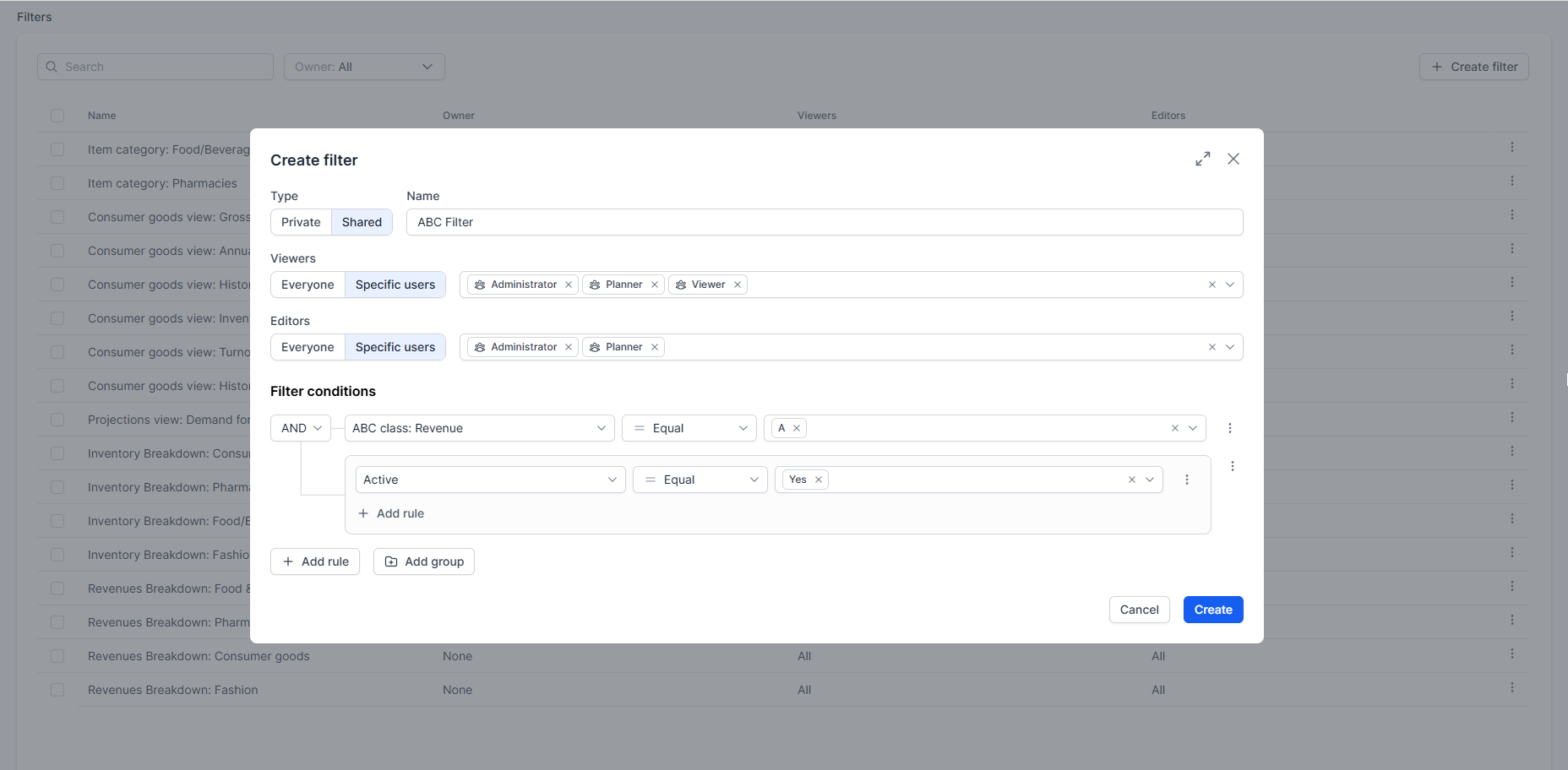
Create clear review, approval, and release points across recurring planning cycles, so teams know when inputs can change, when decisions are locked, and which version of the plan moves forward into execution.
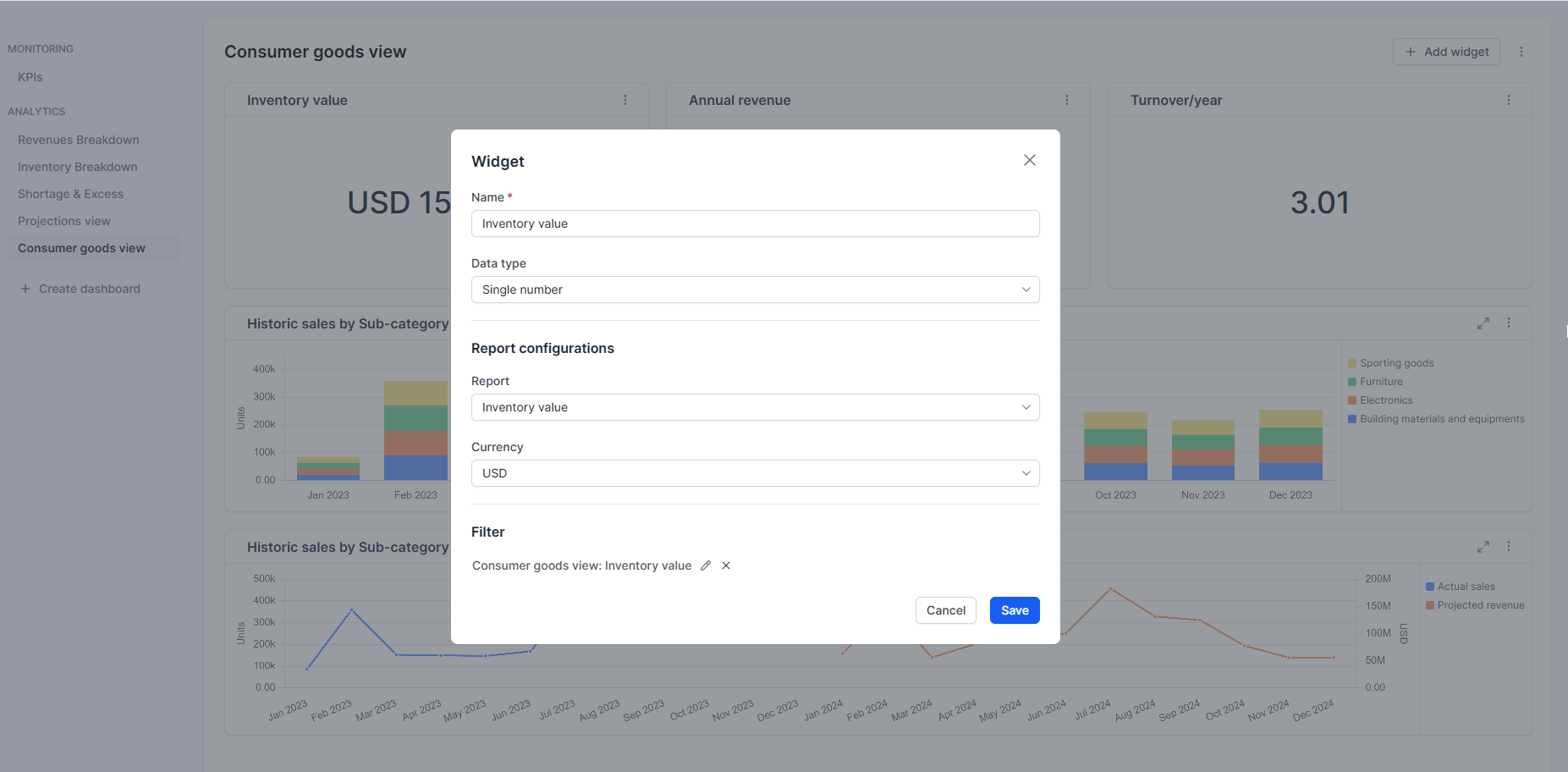
Review forecast accuracy, historical results, and planned-versus-actual performance to improve the assumptions behind future planning cycles and make the next plan more reliable.
30% Inventory Reduction Without Sacrificing Service Levels: Wild Republic's Planning Transformation
“Streamline really gave us visibility to all the moving parts. It was able to roll it up at a level that finance really loved to see the detail of what the impact was of any change we were going to make — and really gave leadership a directional view of: this is where we are, this is where we're going.”
Adam Ford
Global Senior Supply Chain Manager, Wild Republic

Plan across locations, channels, and business structures
Match the level of planning detail to the decision, using item, location, category, channel, and consolidated business views.
Support different planning structures
Organize planning around locations, channels, categories, and other business dimensions imported into the project.
Work consistently across currencies
Convert inventory, purchasing, revenue, and other value-based reports into a defined base currency or review them in selected currencies.
Combine data from multiple systems
Bring planning inputs from spreadsheets, databases, ERP systems, and other connected sources into the same Streamline project.